
The quick answer
- Best dehumidifier for a cold room or garage: a desiccant model. It doesn’t rely on cold coils, so it keeps pulling water out of chilly air where compressor models struggle.
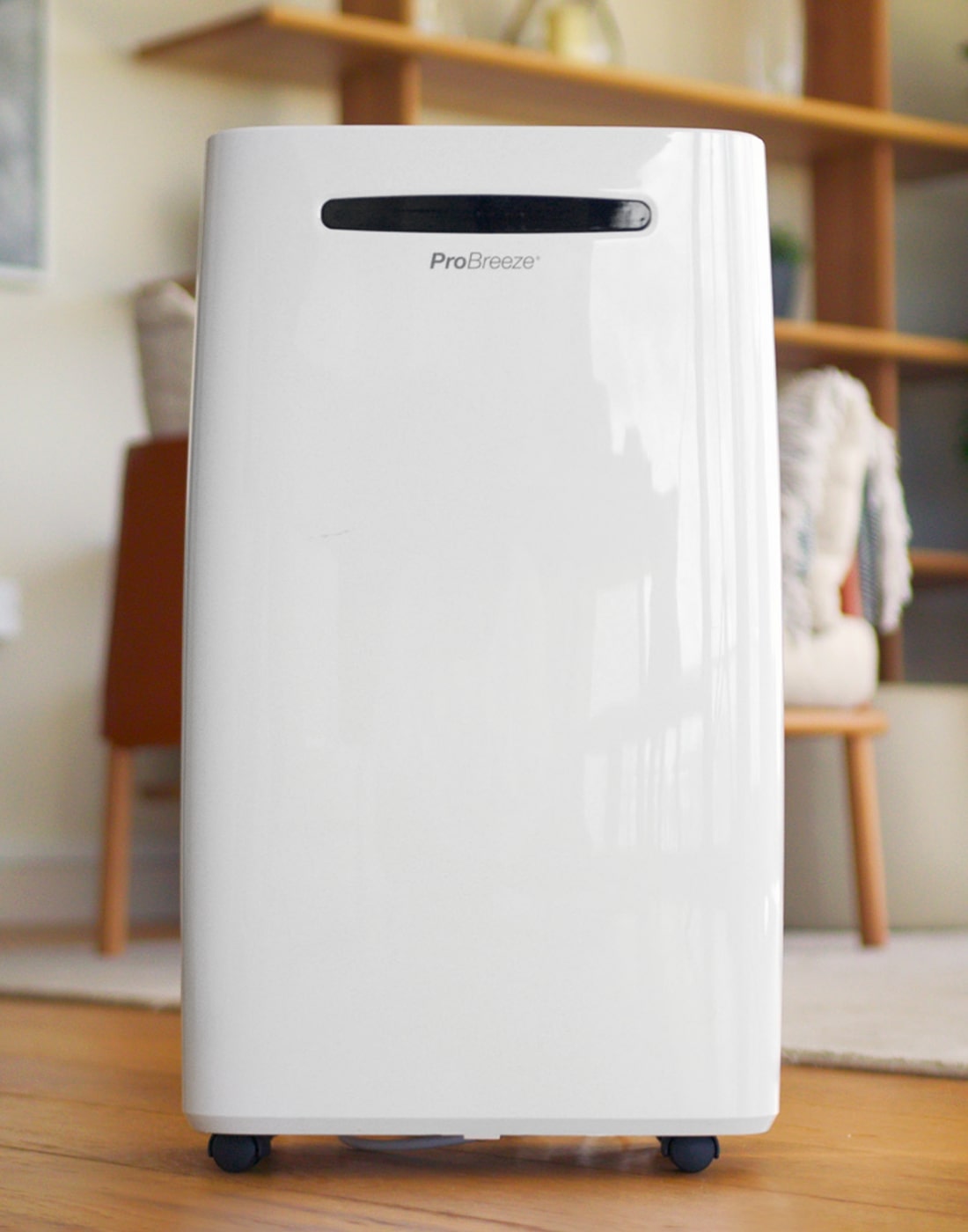
- Our pick: the Pro Breeze 10L Desiccant Dehumidifier. It works from 1°C to 40°C, removes up to 10 litres a day and covers spaces up to 35 m².
- Bonus for winter: it gently warms the air as it dries, and has a heating setting to take the chill off.
- Heated rooms above about 15°C? A compressor dehumidifier is cheaper to run there.
- Jump to our pick.

Your dehumidifier collects plenty in the kitchen, but next to nothing in the garage? You’re not imagining it. Choosing the best dehumidifier for a cold room, garage or conservatory comes down to one thing: how the machine pulls water out of the air. Get it right and you’ll protect your tools, bikes, car, stored boxes and garden furniture from damp, rust, mildew and that musty smell all winter long.
1Which dehumidifier works best in cold rooms?
A desiccant dehumidifier works best in cold rooms, garages and other unheated spaces, roughly anywhere below 15°C. It uses a moisture-absorbing wheel instead of cold coils, so its performance doesn’t collapse when the temperature drops. In heated living spaces above about 15°C, a compressor dehumidifier is the more economical choice.
That’s why we make both. Our compressor range covers bedrooms, living rooms and drying washing, while our desiccant dehumidifier is built for the cold, hard-to-heat corners of your home.
2Desiccant vs compressor in the cold
A compressor dehumidifier works like a fridge: air passes over cold coils and moisture condenses into the tank. The colder the room, the less moisture there is to condense, and in very cold air the coils can frost over. A desiccant dehumidifier instead draws air through an absorbent wheel, then releases the captured moisture into the tank. That makes it far less dependent on room temperature.
| 10L Desiccant | OmniDry 12L (compressor) | 20L Max Extraction (compressor) | |
|---|---|---|---|
| Working temperature | 1–40°C | 5–35°C | 5–32°C |
| Best in | Cold and unheated spaces | Heated rooms | Heated rooms, laundry |
| Water removed | Up to 10 L a day | Up to 12 L a day | Up to 20 L a day |
| Room size | Up to 35 m² | Up to 20 m² | Up to 30 m² |
| Power | 620 W | 200 W | 320 W |
| Running cost per hour | 16.3p | 5.3p | 8.4p |
| Noise | Quieter: no compressor | Compressor hum | Compressor hum |
| Warms the air? | Yes, plus heating setting | Slightly, as it dehumidifies | Slightly, as it dehumidifies |
Extraction figures are maximum ratings. Hourly costs at full power (rated power from Pro Breeze product specifications: rating label, at 27°C/60% RH where stated) and 26.32p per kWh, the Ofgem price cap electricity unit rate for Direct Debit customers from 1 October 2026. Source: Pro Breeze product specifications.
3How cold is too cold?
Every dehumidifier has a rated working temperature range, and it’s the single most important spec to check for a cold space:
- Pro Breeze compressor dehumidifiers are rated from 5°C, but they’re happiest in heated rooms. As the room gets colder they collect noticeably less water, so for spaces that regularly sit below about 15°C, go desiccant.
- The Pro Breeze 10L Desiccant is rated from 1°C to 40°C, covering a garage, outbuilding or conservatory through a typical UK winter.
- Mini (Peltier) dehumidifiers are rated for warmer spaces, from 15°C at the lowest depending on model, so they’re not designed for cold garages or outbuildings. Check each model’s working range.
4Best dehumidifier for a garage: what size do you need?
Garages are the classic cold, damp space: concrete floors, single-skin walls, a car dripping rain and no heating. Damp air there means rusty tools, corroded bike chains, mouldy cardboard boxes and musty camping kit. A desiccant dehumidifier is the right tool for the job.
- Size it: measure length × width. The 10L Desiccant covers spaces up to 35 m², so a 3 × 6 m single garage (18 m²) is well within its rating.
- Skip the emptying: attach the 2 m hose for continuous drainage to a floor drain or outside, so the 3 L tank never needs emptying.
- Set and forget: choose your target humidity and the built-in humidity sensor stops it running once it’s reached. The 12-hour timer lets you decide when it runs.
- Keep doors shut: a dehumidifier can’t keep up with a garage door left open to the street.

5Which dehumidifier works in an unheated conservatory?
Conservatories swing from greenhouse-warm on a sunny afternoon to near-freezing overnight. That’s exactly when condensation streams down the glass and the frames start growing black spots. Because the 10L Desiccant works across the full 1–40°C range, it keeps going through those cold nights and mornings when a compressor model would slow right down. Its heating setting takes the chill off too, so the room is more pleasant to use in winter.
Place it in the middle of the room, away from curtains, with the doors to the house closed. For more on stopping wet windows and keeping mould from coming back, read our guide to dehumidifiers for condensation and mould.
6Caravans, motorhomes and boats
Cold, sealed-up leisure vehicles are a magnet for condensation and mildew over winter. What works depends on whether you have power:
| Situation | Best choice |
|---|---|
| In storage, no electric hook-up | Osmo® moisture absorbers |
| In use in cold weather, with hook-up | 10L Desiccant Dehumidifier |
| Heated and in use, small space | Mini dehumidifier |
Refillable, silent and needing no electricity, Osmo® absorbers are ideal for keeping a stored caravan or boat cabin fresh between trips. When you’re using the van in winter, the 10L Desiccant weighs 6.8 kg and measures 31.8 × 21.3 × 49.2 cm, compact enough to stow. Browse our full caravan dehumidifier range.
7Cold bedrooms and spare rooms
A spare room with the radiator turned off, a north-facing bedroom or a basement can easily sit in the low teens all winter, which is just where condensation and mould take hold. If the room is cold most of the time, a desiccant model will keep it noticeably drier and fresher, and its washable anti-bacterial filter helps clean the air as it works. Customers tell us a drier room simply feels warmer and more comfortable, and many with allergies or asthma say it’s easier to breathe in a room without that damp, musty air.
If the room is heated to 15°C or more when you use it, a quiet compressor model such as the OmniDry 12L (36 dB) will cost less to run. Not sure which suits your home? Our 13-step dehumidifier buying guide walks you through it.
8Our pick: Pro Breeze 10L Desiccant Dehumidifier
It keeps working down to 1°C, making it the dehumidifier to choose for garages, conservatories, basements, utility rooms and outbuildings.
- Built for the cold: desiccant technology that doesn’t rely on the room being warm.
- Heating setting: gently warms the air as it dries, perfect for winter.
- Up to 10 litres a day to beat damp, condensation and musty smells.
- Set your humidity: a built-in humidity sensor switches it off at your target level, saving energy.
- Low-hassle emptying: large 3 L tank or 2 m hose for continuous drainage.
- Cleaner air: washable anti-bacterial filter, 12-hour timer and LED humidity display.

10L Desiccant Dehumidifier
Works from 1°C, up to 10 L a day, heating setting and continuous drainage. Covers up to 35 m².
View 10L Desiccant
OmniDry 12L
Up to 12 L a day at a whisper-quiet 36 dB, using just 200 W.
View OmniDry 12L
Osmo® moisture absorber
Silent, refillable and electricity-free, with a 1.3 L tank.
View Osmo®Compare every model on our dehumidifiers page, or see our compressor dehumidifiers for heated rooms.
9Frequently asked questions
Can I run a dehumidifier in a garage in winter?
Yes, if you choose the right type. A desiccant dehumidifier like the Pro Breeze 10L Desiccant is rated from 1°C, so it keeps working in a cold garage. Compressor models collect much less water in the cold and are better kept for heated rooms.
How much does a desiccant dehumidifier cost to run?
The 10L Desiccant is rated at 620 W, about 16.3p an hour at full power on the price cap from 1 October 2026. Because the humidity sensor switches it off once your target is reached, it won’t run at full power all the time. See our dehumidifier running costs guide for every model.
Does a desiccant dehumidifier heat the room?
It gently warms the air as it removes moisture, and the 10L Desiccant also has a heating setting to help take the chill out of cold spaces. It isn’t a replacement for a heater in a room you live in, but in a garage or conservatory the extra warmth is a real bonus.
Will one dehumidifier cover a double garage?
Measure the floor area (length × width). The 10L Desiccant is rated for spaces up to 35 m². A 3 × 6 m single garage is 18 m², well within that. A 6 × 6 m double garage is 36 m², just above it, so contact Pro Breeze for advice rather than assuming one unit will cover it. For a very damp garage, keep the door closed and use continuous drainage so it can run as long as it needs.
Can I use continuous drainage?
Yes. Attach the 2 m hose to the 10L Desiccant and run it to a drain, so you never have to empty the 3 L tank. If you use the tank instead, the dehumidifier pauses automatically when it’s full. Continuous drainage is ideal for garages and outbuildings you don’t visit every day.
Cold spaces need a dehumidifier built for the cold. For garages, conservatories, basements and outbuildings, choose the Pro Breeze 10L Desiccant Dehumidifier and keep damp, rust and musty smells away all winter. For warmer rooms, explore our full range of dehumidifiers, and find more advice on the Pro Breeze blog.