Dehumidifiers can feel like a “new” home appliance, the kind you only discover after a damp winter or a frustrating laundry season. But the idea of controlling moisture in the air has been shaping homes, buildings, and everyday comfort for well over a century.
The quick timeline
Here’s the big picture, without the technical rabbit holes:
- Before appliances: people managed damp with ventilation, fires/heating, and absorbent materials.
- Early 1900s: engineers begin controlling humidity for industrial problems (where moisture ruined materials and processes).
- Mid‑century onwards: as refrigeration technology becomes mainstream, moisture control becomes easier, safer, and more compact.
- Late 20th century to now: portable home dehumidifiers become more common, quieter, more efficient, and easier to live with.
- Today: dehumidifiers move beyond “fixing damp” and into everyday comfort (laundry, bedrooms, small homes, and busy routines).

Before machines: How homes tried to manage damp
Long before anyone owned a dehumidifier, households shared the same goals: keep rooms feeling fresh, reduce musty smells, and stop moisture from settling where it shouldn’t.
Common approaches included:
- Ventilation (opening windows, airflow through vents and chimneys)
- Heat (fires, stoves, steady warmth to reduce that clammy feeling)
- Practical routines (drying clothes outdoors when possible, keeping furniture off cold external walls)
- Absorbent materials (charcoal, salts, and later purpose‑made desiccants used in cupboards and storage)
These methods worked... sometimes. But they depended on the weather, the building, and time. As homes and cities changed, people needed something more consistent.
Image credit: Medium
The early 1900's breakthrough: Humidity control becomes 'a thing'
One of the biggest leaps in humidity control didn’t start in a home - it started in industry.
In the early 1900s, a New York printing company struggled with a surprisingly familiar problem: when humidity changed, paper expanded and contracted. That meant colours misaligned and print quality suffered. Engineers began designing systems that didn’t just cool air; they controlled moisture as well.
That moment matters because it helped formalise the idea that comfort and air quality aren’t only about temperature. Humidity is its own lever, and controlling it changes how a space feels and functions.
Image credit: Smithsonian Institution
From factories to living rooms: The rise of dehumidifiers
For decades, humidity control lived mostly in commercial buildings and specialist settings, places where moisture-damaged goods slowed production or created expensive problems.
Over time, the technology became more compact and more accessible. As refrigeration and household appliances developed through the 20th century, dehumidifiers found their way into the home: basements, utility rooms, bedrooms, and anywhere moisture made life harder.
What didn’t change? The everyday triggers:
- Showers and cooking
- Drying clothes indoors
- Poor airflow in certain rooms
- Seasonal weather and naturally humid climates
The difference was that moisture control no longer relied on “perfect habits”. It could be handled quietly by a device built for the job.
Two paths, one goal: Compressor vs desiccant
Modern dehumidifiers tend to follow two main approaches, both aimed at the same outcome: less moisture in the air.
Compressor dehumidifiers:
These are the most common in homes. They pull air in, cool it so moisture condenses into water, then release drier air back into the room.
Desiccant dehumidifiers:
Instead of cooling air, these use a moisture‑absorbing material (a desiccant) to capture humidity. Desiccants have a long history in storage and industrial drying, and they can be especially useful in cooler spaces, depending on the setup.
You don’t need to “pick a technology” first. Start with your home: the room, the temperature, and the problem you want to solve.
The modern dehumidifier: Quieter, smarter, easier to live with
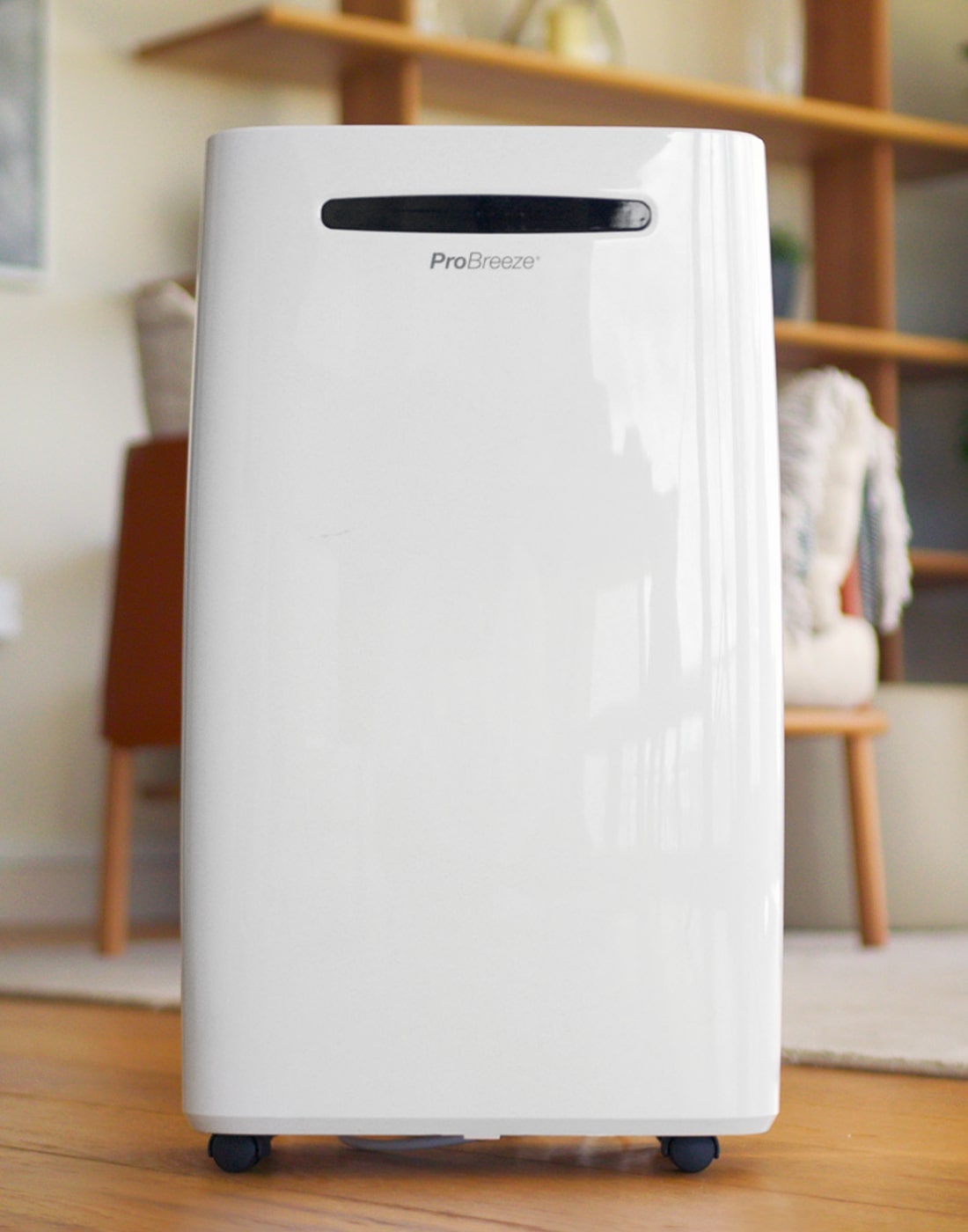
Today’s dehumidifiers are designed for real homes, not just utility rooms.
What’s changed in the modern era:
- Easier controls and clearer modes (so you don’t need a manual open)
- Better efficiency and quieter operation
- Features that fit everyday life: timers, auto shut‑off, continuous drainage options, laundry modes, and humidity sensing
The best ones feel like background support: practical, reassuring, and simple. The kind of product you stop noticing… because your home just feels better.
Why dehumidifiers are having a moment (and why that matters)
If dehumidifiers have been around for so long, why are more people talking about them now?
Because modern homes create modern moisture:
- More indoor laundry drying (especially in colder months)
- Smaller spaces where humidity builds faster
- Better-insulated homes that hold onto moisture
- Busier routines that make “open every window daily” unrealistic
This is where dehumidifiers shift from niche appliance to household must‑have: not a gadget, but a simple way to keep comfort under control.
Not just a fix: Dehumidifiers as a ‘little luxury’
You don’t need a full‑blown damp problem to benefit from a dehumidifier.
For many households, it’s a small upgrade that makes the home feel lighter:
- Rooms feel fresher and less stuffy
- Bedrooms feel more comfortable
- Bathrooms bounce back faster after showers
- Laundry days feel easier, even when you’re drying indoors
It’s comfort you can feel without turning home life into a project. And that’s why more people keep them running quietly in the background, not only when something goes wrong.
How to choose a dehumidifier (using the history as a shortcut)
The history is helpful because it tells you what to focus on: your space and your routine.
Start with:
-
Where’s the moisture? Bedroom, bathroom, basement, laundry area.
-
How big is the space? Choose coverage that matches the room
-
What’s the temperature like? Some types suit typical rooms; others suit cooler spaces
-
How hands‑off do you want it? Tank size, continuous drainage, auto-modes
-
Will you notice noise? Quiet matters
A good dehumidifier should feel like a simple helper, not another job.
Common myths (quick clarifications)
A few myths stop people from considering a dehumidifier even when it could help.
“It’s only for mould”
It’s also for comfort, laundry, and everyday moisture control.
“It makes the air ‘too dry’”
Most people use them to keep humidity within a comfortable range, not to dry out a home completely.
“It’s basically an air purifier”
Different job: purifier filters particles; dehumidifier removes moisture.
“It’s complicated”
Modern units are designed to be simple: set a mode, let it run, empty the tank (or use drainage).
“It’s only a winter thing.”
Humidity happens year‑round; it just shows up differently.
FAQs
When was the first dehumidifier invented?
Humidity control systems emerged in the early 1900s, and the ideas behind modern dehumidification grew alongside air conditioning and refrigeration technology over the decades.
Is a dehumidifier the same as air conditioning?
They’re related, but not the same. Air conditioning is often used for cooling and comfort. A dehumidifier’s job is specifically to remove moisture from the air.
Where do dehumidifiers work best?
Anywhere moisture builds up: bedrooms, basements, bathrooms, utility rooms, and near indoor laundry drying — especially when windows stay closed.
Do I need one if my home feels ‘fine’?
Many people use a dehumidifier as a comfort upgrade. It's a simple way to keep home feeling fresh and balanced.
The takeaway
Dehumidifiers didn’t appear overnight. They grew out of a century of learning how moisture affects comfort, materials, and everyday living, and how much better a space feels when humidity is under control.
Today, they’re not just a specialist appliance for damp problems. They’re a practical, quietly powerful upgrade that makes homes easier to live in.