

Please select your location so we can direct you to the correct store.

How do different types of dehumidifiers work?
If you’ve started looking for a dehumidifier, you’ll notice something quickly: not every dehumidifier is built the same.
Some are designed for everyday rooms, some work brilliantly in cooler spaces, and some are small ‘mini’ units made for cupboards or tight areas. The good news? Once you understand the basics, choosing the right type becomes simple.
In this guide, we’ll explain the main types of dehumidifiers in plain English - how each one works, where it performs best, and how to pick the right type for your home (without getting lost in specs).

The quick answer: the 3 main types
Most home dehumidifiers fall into three categories:
- Compressor (refrigerant) dehumidifiers — the most common type for typical indoor temperatures
- Desiccant dehumidifiers — often strong performers in cooler rooms
- Thermoelectric (Peltier) / mini dehumidifiers — small, quiet units for very small spaces.
There are also whole-house systems, but for most households, one of the three types above is the best place to start.
What all dehumidifiers have in common?
Whatever the type, the basic idea is the same: air goes in, water comes out.
A fan pulls humid air into the unit. The dehumidifier removes some of the water vapour, and that water collects in a tank (or runs out through continuous drainage). The drier air is then released back into the room.
Many dehumidifiers also use a humidistat (a humidity sensor) to help maintain a comfortable level automatically—so it can feel like a quiet helper in the background, rather than another job.
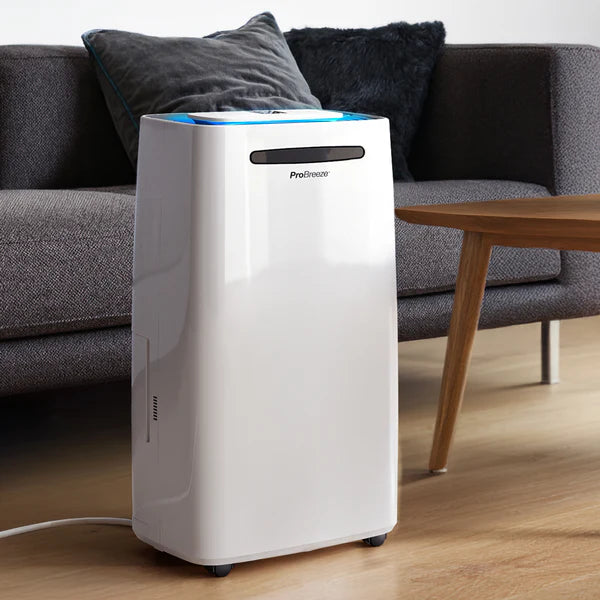
Type 1: Compressor (refrigerant) dehumidifiers - how they work
Compressor dehumidifiers remove moisture by cooling the air.
Here’s the simple version:
- A fan pulls humid air in
- The air passes over cold coils inside the unit
- Moisture condenses into water droplets (like water forming on a cold drink)
- The water drips into a tank (or drain)
- The air is gently warmed again and released back into the room.
This design is why compressor dehumidifiers are so popular: they’re effective in typical indoor temperatures and can remove a lot of moisture over time.
Best for: everyday rooms and general humidity control
A compressor dehumidifier is usually the best all‑round choice for:
- Bedrooms and living rooms
- Kitchens and hallways
- Utility rooms and everyday laundry drying
- Homes dealing with condensation, damp corners, or a ‘heavy’ feeling in the air.
If the space you want to treat is consistently very cool (like a cold garage or basement), performance can vary so it’s worth considering a desiccant model.
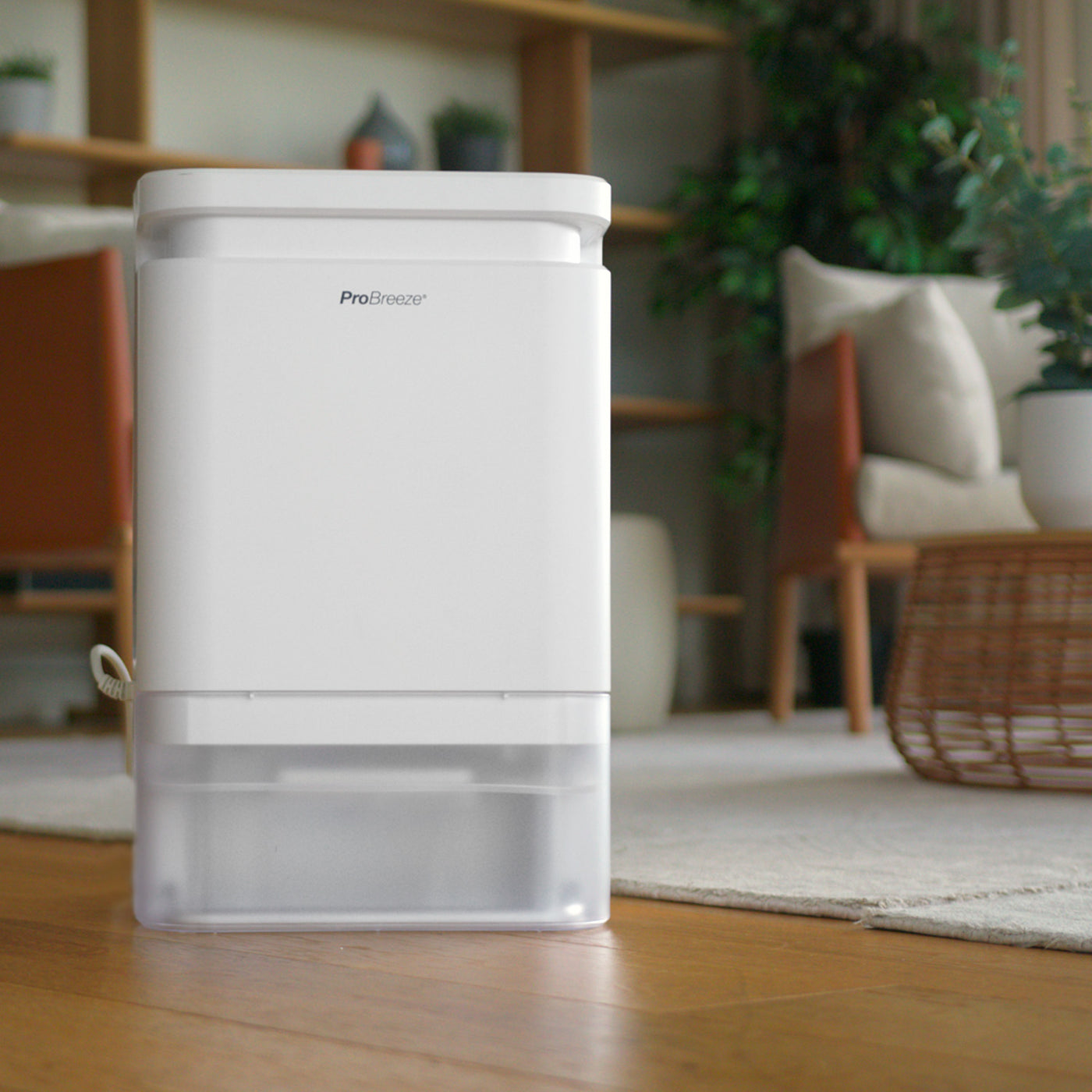
Type 2: Desiccant dehumidifiers - how they work
Desiccant dehumidifiers remove moisture by absorbing it.
Instead of cold coils, they use a moisture‑loving material (a “desiccant”) - often arranged in a rotating wheel. As air passes through, the material captures water vapour. A second airflow (warmed inside the machine) then dries the wheel so it can keep working, and the moisture is collected as water.
Because this method doesn’t rely on cold coils, desiccant dehumidifiers often perform especially well in cooler environments. You may also notice the air feels slightly warmer as it leaves the unit.
Best for: cooler rooms and quicker spot‑drying
A desiccant dehumidifier can be a great fit for:
- Cooler spaces (garages, basements, workshops)
- Homes that feel cold and damp in winter
- Bedrooms where you want a gentle warmth and drier air
- Laundry drying in cooler rooms.
If your main challenge is a cool, moisture‑prone space, a desiccant model can feel like the easiest path to a fresher, more comfortable room.
Type 3: Thermoelectric (Peltier) & mini dehumidifiers - how they work
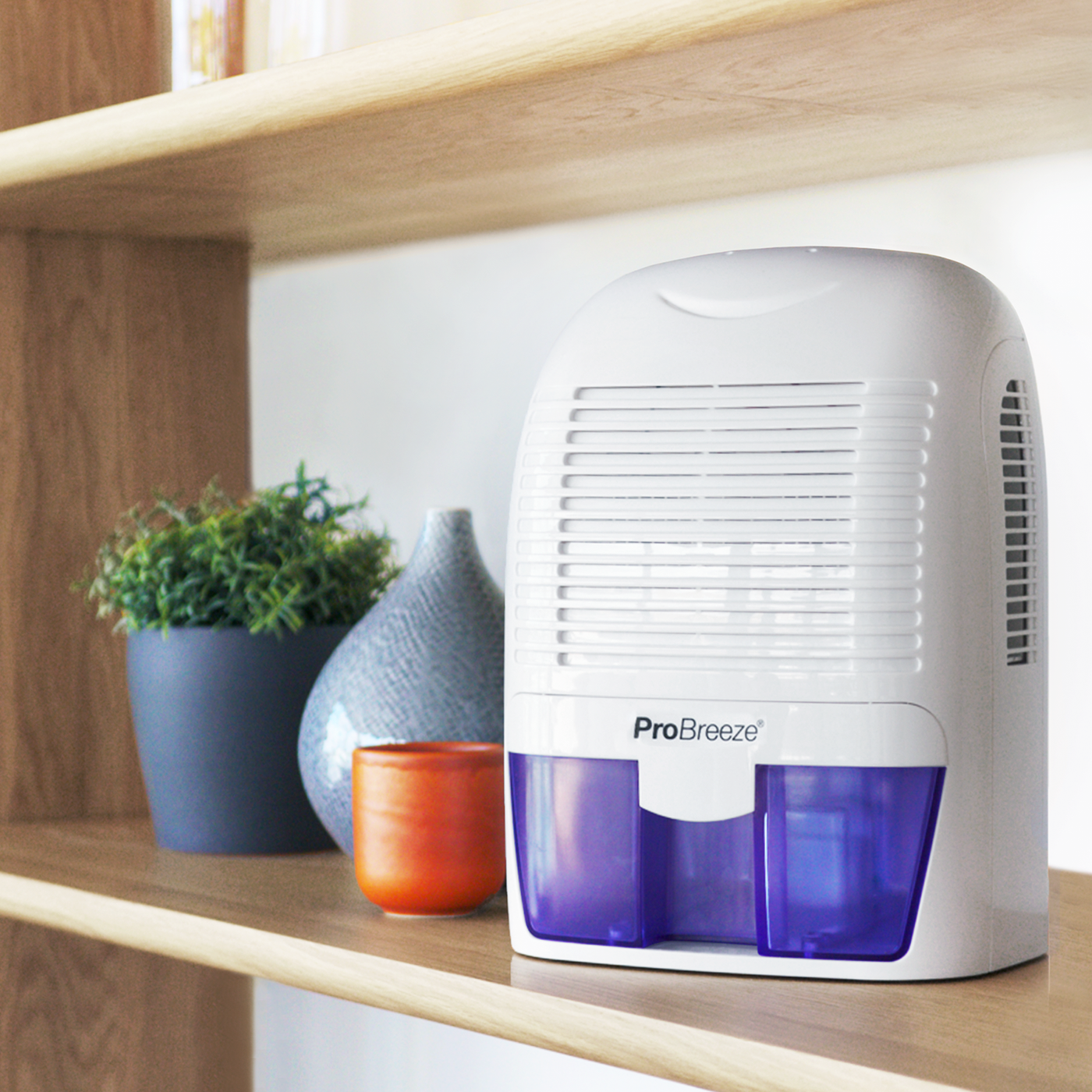
Mini dehumidifiers often use thermoelectric technology (sometimes called Peltier). Instead of a compressor, they use a compact cooling plate that creates a cold surface. Moisture condenses on that surface and drips into a small tank.
These units are typically:
- Small and quiet
- Best for very small areas
- Lower in moisture‑removal capacity than full‑size models.
If you’re dealing with room‑wide humidity, a mini unit may struggle. But for a wardrobe, cupboard, or small ensuite, they can be a tidy little helper.
What about whole‑house dehumidifiers?
Whole‑house dehumidifiers are systems designed to treat larger areas, often connected to ducting or HVAC. They can be a great solution for bigger homes or persistent humidity across multiple rooms, but they’re usually a higher investment and may require professional installation.
For most people, a portable home dehumidifier is the simplest, most flexible place to start: you can put it exactly where the problem, or comfort opportunity, is.
How to choose the right type - A simple decision guide
Start with two questions: what space are you treating, and what’s the temperature like most of the time?
- Typical indoor room temperature: Start with a compressor model
- Cooler rooms (garages / basements / winter chill): Consider a desiccant model
- Very small enclosed spaces (wardrobes / cupboards): A mini thermoelectric unit can be enough.
Then check the practical details:
- Room size / coverage
- Extraction rate (how much moisture it can remove)
- Noise level (especially for bedrooms)
- Tank size and ease of emptying
- Continuous drainage option (great for “set and forget”)
- Everyday ease: clear controls, sensible modes, simple maintenance.
A good choice should feel calm and effortless—comfort made clear.
How to use any dehumidifier well (3 quick tips)
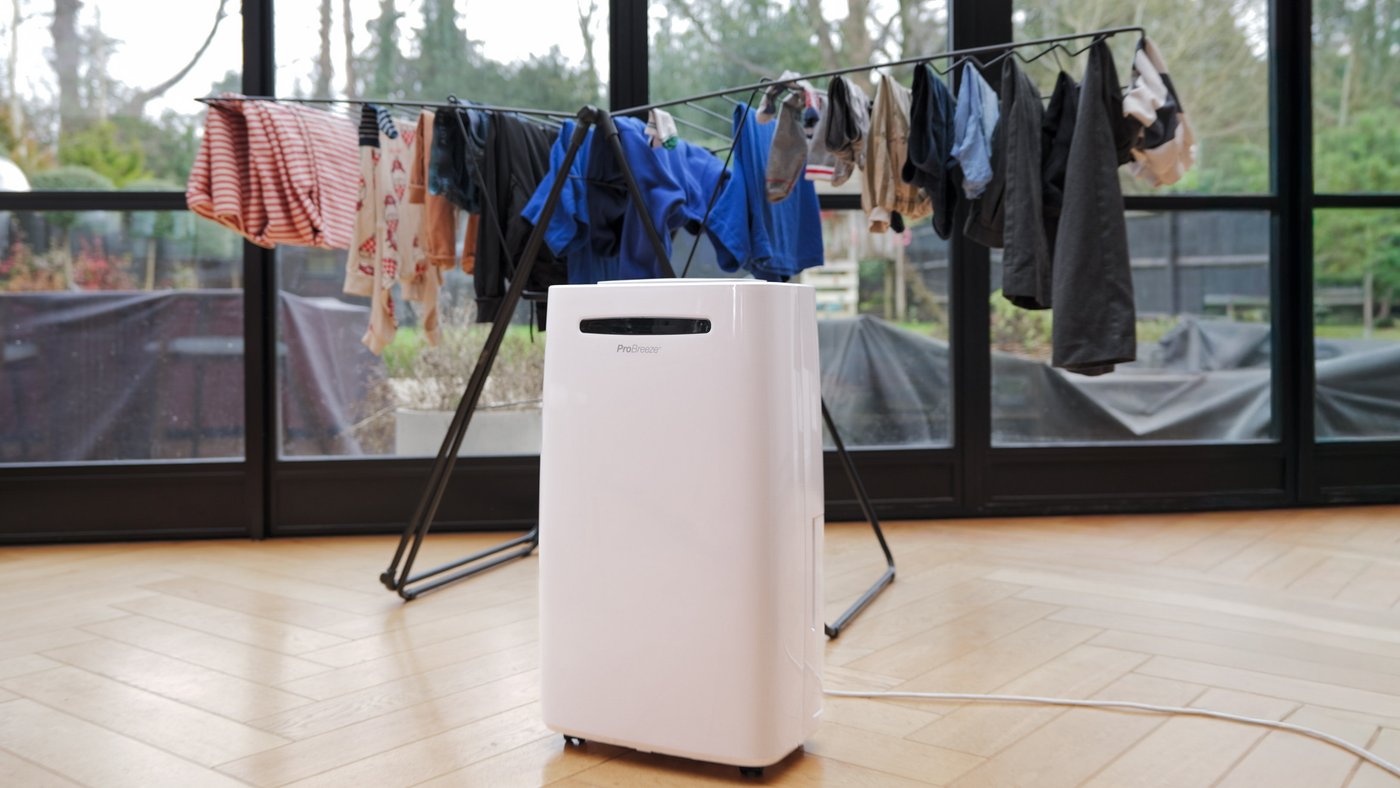
- Put it where the moisture is (laundry area, damp‑prone room, or the space you want to feel fresher)
- Close windows while it runs (otherwise you’re drying the outdoors)
- Give it breathing room (don’t tuck it behind curtains or tight into corners).
If your model supports it, continuous drainage can make things even more “set and forget” in a utility room or basement.
FAQs
Desiccant models are often a strong choice for cooler spaces because they don’t rely on cold coils.
Yes, within their limits. They’re best for small enclosed areas. For whole rooms, a full‑size compressor or desiccant model is usually more effective.
Running cost depends on your home, the temperature, and how long the unit runs. The most efficient option is usually the one that’s best matched to your space because it reaches the result you want without working harder than it needs to.
Not necessarily. Many people use a dehumidifier as a comfort upgrade -fresher‑feeling rooms, easier laundry drying, and a home that feels lighter day to day.
The Takeaway
Different dehumidifiers use different methods to do the same job: remove excess moisture so your home feels more comfortable.Compressor models are the everyday all‑rounders. Desiccant models can shine in cooler rooms. Mini units can help in small enclosed spaces.
Whichever type you choose, the goal is the same: a home that feels lighter, fresher, and easier to live in.